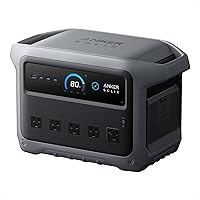
EcoFlow Delta 3 Classic vs Plus: Which to Buy? (November 2026)
Pick the Delta 3 Classic if you want a simpler unit; pick the Delta 3 Plus if you need app control, storm alerts and battery expansion. The ecoflow delta 3 classic vs plus call is about how you'll use it, not which is newer.
On this page (10 sections)
- Quick verdict: which Delta 3 should you buy?
- Delta 3 Classic vs Plus side by side
- Surge headroom: 3600W vs 2400W
- Charge speed: 45 minutes vs 40 minutes
- Battery expansion: the Plus reaches 5kWh
- UPS protection and app control
- Size, weight and ports
- Who should buy which?
- Charging setup and what to expect
- Verdict: Classic or Plus for you?
Pick the Delta 3 Classic if you want a simpler unit and a lower price; pick the Delta 3 Plus if you need battery expansion and app control. In this ecoflow delta 3 classic vs plus comparison, the two stations share 1024Wh of LiFePO4 capacity and 1800W output, so the real choice comes down to how much you want the Plus features.
Both run the same LiFePO4 chemistry, and both can protect sensitive gear from short outages. The sections below show where they split, so you can decide in a few minutes.
Quick verdict: which Delta 3 should you buy?
For most buyers, the Delta 3 Classic bundle is the better buy. It ships with a 220W solar panel, charges to 80% in 45 minutes and handles a 3600W surge, which is more headroom than the Plus offers.
Choose the Delta 3 Plus if you plan to add battery packs, want the slightly quicker 40 minute AC charge, or want an IP65 battery pack. Its 220W bifacial panel bundle is the version we compared here.
If you only need station backup and already own solar panels, the station-only versions of either model keep the price lower. Our EcoFlow Delta 3 Classic review covers that unit on its own.
The short answer: the Classic suits most homes and campers, and the Plus earns its place when expansion and management features matter more than surge headroom.

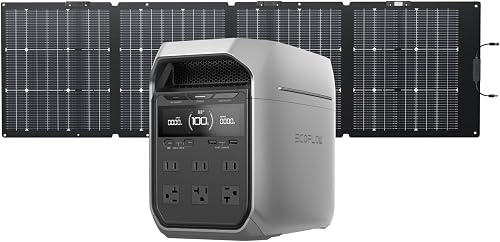
Delta 3 Classic vs Plus side by side
The Classic wins on surge and value; the Plus wins on charging speed, expansion and battery protection. Here's how the specs line up.
| Feature | Delta 3 Classic bundle | Delta 3 Plus bundle |
|---|---|---|
| Capacity | 1024Wh | 1024Wh |
| Output | 1800W (3600W surge) | 1800W (2400W starting) |
| AC charge to 80% | 45 min | 40 min |
| Solar charge | 5.8 hr with 220W panel | 80% in 1 hr, 100% in 70 min |
| UPS switchover | Under 10 ms | 10 ms |
| Battery expansion | Not compatible with Delta 2 or Delta 3 extra batteries | Up to 5kWh with Delta 3 series packs |
| IP rating | IP65 battery pack | |
| Outlets | 6 | 13 |
| Weight | 26.7 lb | 27 lb station, 62 lb with panel |
| Included | Delta 3 Classic, 220W panel | Delta 3 Plus, 220W bifacial panel |
The capacity and output rows are identical, which tells you the daily jobs are close. The gaps that decide the choice sit in the lower rows.
Both bundles ship as two boxes, so the station and panel may arrive separately. That's normal for both.
The Plus also lists five charging routes in its own marketing: wall AC at 1500W, solar, an 800W alternator, the EcoFlow smart generator, and AC plus solar together. The Classic is built around wall AC and solar.
If you own a van with an alternator or plan to pair a smart generator, that extra input list is a genuine Plus point.
The two Plus listings also differ in what's in the box. The B0DR7ZDMS6 bundle pairs the station with the 220W bifacial panel.
The B0DCC2BVFW listing is the station alone, with an AC charging cable and a solar charge cable but no panel. Decide on the pairing first, then on the model.
Surge headroom: 3600W vs 2400W
The Classic has the edge for motor loads because its surge rating is 3600W, against the Plus's 2400W starting figure. That gap matters when a fridge compressor or pump kicks on.
A compressor can draw several times its running watts for a second or two at startup. The Classic's 3600W surge gives it more room to carry that spike without tripping.
The Plus still runs resistive appliances above 2200W continuously with X-Boost. And both reach the same 1800W running output, so normal loads are a tie.
If you plan to run a full-size fridge, a well pump or a circular saw, the Classic's surge number is the safer bet. For laptops, lights and a microwave, either unit is fine.
Reading the two surge numbers
The Classic's 3600W is listed as a surge with X-Boost behind it. The Plus's 2400W is listed as starting wattage, and the same spec sheet also shows an engine power maximum of 2400 watts.
Treat both figures as the ceiling for a short motor kick, not a steady load. Resistive gear like a kettle, heater or incandescent lamp has no startup spike, so it draws close to its rating from the first second.
Motors are the opposite. A fridge or pump can briefly pull several times its running watts.
That is the moment the surge rating does the work, and the Classic holds a clear advantage there.
Charge speed: 45 minutes vs 40 minutes
The Plus charges marginally faster from AC, but the gap is small. The Plus uses a 1500W AC input to hit 80% in about 40 minutes and full charge in around 56 minutes.
The Classic hits 80% in 45 minutes with X-Stream AC charging, so the difference is roughly five minutes and hardly a deciding factor on its own.
Solar is a different story. The Classic's 220W panel gives a 5.8 hour recharge from empty.
The Plus takes 70 minutes to 100% from solar, which is far quicker. That makes the Plus better for solar-first users, while the Classic is fine for people who mostly charge from a wall outlet and top up with sun.
The station-only Classic adds one more option the bundle doesn't call out. With an optional 500W panel it can recharge in 2.5 hours, so the Classic platform can go much faster on solar if you supply a larger array.
The Plus charging options in full
The Plus lists five routes, and each has its own time. Wall AC gets to 80% in 40 minutes and full in 56.
Solar reaches 80% in 1 hour and 100% in 70 minutes. An 800W alternator hits 80% in 1 hour and full in 1.3 hours.
The EcoFlow smart generator does 80% in 40 minutes and 100% in 56 minutes, and hybrid AC plus solar matches that.
That hybrid mode is worth noting for outage planning. You can plug into a wall and a panel at once and shorten the wait, which matters when a storm keeps the grid down for days.
Solar panel quality
The Plus bundle's 220W panel is bifacial, so it collects up to 28% more energy from the back side. It also has a 30–60° adjustable bracket and a solar angle guide.
The Classic bundle's 220W panel uses N-Type cells with up to 25% conversion efficiency.
The Plus panel's adjustable stand and angle guide make aiming easier, while on the Classic panel you set the angle by eye.
Battery expansion: the Plus reaches 5kWh
Only the Plus expands. It works with Delta 3, Delta Pro 3 and Delta 2 Max battery packs, taking total storage up to 5kWh.
That turns a 1024Wh station into a small whole-home reserve.
The Classic is a closed system. EcoFlow states it isn't compatible with the Delta 2 Smart Extra Battery or the Delta 3 Series Smart Extra Battery, so its 1024Wh is what you get.
That's a real limit for anyone planning to grow a system over time. If you start small and add capacity each year, the Plus is the model that lets you.
For a renter or camper who just needs a single box, the Classic's fixed capacity is easier to accept.
What 5kWh actually buys you
Five kilowatt hours is roughly five times the base capacity. It is enough to ride out a long outage with a fridge, lights and a router running, or to cover a workshop session without watching the percentage.
The expansion path also future-proofs the purchase, since you keep the same inverter and app when you add a pack.
The catch is that the Classic can't follow that path at all. If you think there is any chance you will want more storage in two or three years, that single fact should decide the call.
UPS protection and app control
Both units switch in under 10 ms, but the Plus leans harder into backup management. The Classic protects PCs, servers and medical devices with an automatic switch to battery.
The Plus also lists a true 10 ms UPS switchover, aimed at NAS drives, servers and point-of-sale systems, so either will get you through a blink.
The bigger difference is software. The Plus includes an app with 12-hour storm and outage alerts, a usage dashboard, charge-speed limits and time-of-use scheduling.
The station-only Classic also has app control for schedules and Storm Alert mode. The bundled Classic lacks those advanced management extras in the same way.
Time-of-use and storm alerts
Time-of-use mode is the most practical app feature on the Plus. It charges when power is cheap and discharges when it is expensive, and the app calculates the savings for you.
Storm alert watches for outages up to 12 hours ahead and tops the battery before they hit. Low battery and storage reminders keep the unit from sitting empty for months, which is hard on any lithium pack.
The app on either model also lets you cap charge speed, so you can slow the draw on a shared circuit without losing the fast-charge option for later.
Size, weight and ports
The Plus is the larger cabinet, while the Classic is the lighter of the two. The Plus station weighs 27 lb in its station-only form, and 62 lb in the two-box bundle that includes the panel.
The Classic station weighs 26.7 lb, and its cabinet is 7.9 x 11.1 x 15.7 in, which is compact for an 1800W unit.
The Plus powers 13 appliances at once, with 1800W AC output and a 140W USB-C port. The Classic lists 6 outlets and a 100W USB-C port.
If you need to run many small devices at once, the Plus's 13 outlets help. If you want an easier lift into a truck bed, the Classic wins.
The port count tells you who each unit is for. The Plus is built to be a small distribution hub for a desk, a network rack or a camper with many gadgets.
The Classic's 6 outlets suit a kitchen counter or a campsite table with fewer things plugged in. The USB-C rates differ too: the Plus tops out at 140W for fast-charging a laptop directly, while the Classic's 100W port still handles most laptops but has less headroom for a larger machine.
Who should buy which?
Buy the Classic if you'll run motors and want the simplest path to backup; buy the Plus if you'll grow your system or manage it from your phone.
Choose the Delta 3 Classic if
- You want the most surge headroom per dollar for fridges, pumps and tools.
- You'll charge mainly from a wall outlet and use solar as a top-up.
- You don't plan to add battery packs.
- You want a panel in the box without paying for a bifacial upgrade.
Choose the Delta 3 Plus if
- You want to expand to 5kWh with EcoFlow battery packs later.
- You want the quickest solar recharge and an adjustable bifacial panel.
- You need app alerts, schedules and time-of-use control.
- You want an IP65 battery pack for dustier or wetter sites.
The station-only versions suit anyone who already owns panels. Pick the station-only Classic if you're comparing it with the older Delta 2.
Charging setup and what to expect
Plan your charging around the outlet you have, because the Plus draws 1500W from AC. That's close to a standard 15A circuit's limit, so a dedicated outlet helps.
The Classic's X-Stream input is gentler on the circuit and still fast.
Both units can hybrid charge from AC and solar at the same time, which shortens downtime in a long outage.
Keep either unit in a dry, ventilated spot and leave the vents clear. Follow the manual for charge limits, and don't chain the AC input through a thin extension cord.
Battery care over the years
Both stations use LiFePO4 cells, which is the chemistry to want for a long service life. The Plus quotes 4000 cycles to 80% and a 10-year lifespan, with an IP65 pack that resists splashes, dust and oil.
The Classic quotes LiFePO4 cells rated for 10 or more years of daily use, with an EV-grade cell-to-chassis design and a smart battery management system.
The Plus's 4000-cycle figure is the number to compare against the general LiFePO4 expectation. For either unit, storing at mid-charge and keeping it out of extreme heat helps.
If you're new to this category, our EcoFlow vs Bluetti brand comparison shows how these stations stack up against a rival line before you commit.
Verdict: Classic or Plus for you?
The Delta 3 Classic is the better buy for most readers, and the Delta 3 Plus is the better choice for expansion and management. That's the short version of the ecoflow delta 3 classic vs plus question.
Pick the Classic if you want 3600W of surge, 45 minute AC charging and a 220W panel in one purchase.
Pick the Plus if 5kWh expansion, a 40 minute charge and app alerts are worth more to you than the bigger surge.
If you're still weighing brands, our EcoFlow vs Anker SOLIX breakdown covers the wider field. Either way, you're getting a 1024Wh LiFePO4 station that can run a fridge and keep a laptop alive through an outage.
Frequently asked questions
Is the Delta 3 Plus better than the Delta 3 Classic?
The Plus is better if you want battery expansion and app-based energy management. The Classic is the better pick for most people who mainly need fast AC charging and enough surge for fridges and microwaves.
Can the Delta 3 Classic use Delta 2 extra batteries?
No. EcoFlow says the Delta 3 Classic isn't compatible with the Delta 2 Smart Extra Battery or the Delta 3 Series Smart Extra Battery.
If expansion matters to you, choose the Delta 3 Plus version, which accepts the series battery packs.
Which Delta 3 recharges faster from AC?
The Plus is slightly faster: it reaches 80% in about 40 minutes on 1500W AC input, while the Classic gets to 80% in about 45 minutes. Both are far faster than a typical power station and both handle solar charging.
Does the Delta 3 Plus work as a UPS?
Yes. The Delta 3 Plus switches to battery in 10 ms, which suits NAS drives, servers and point-of-sale gear.
The Classic also lists under-10ms UPS switching, so either can protect sensitive electronics from brief outages.
Can the Delta 3 Classic run a microwave?
Yes, within its limits. The Classic delivers 1800W with a 3600W surge and X-Boost, which suits microwaves, fridges and laptops.
The Plus covers the same loads but its starting surge is rated lower at 2400W, so check a heavy motor for its startup draw.