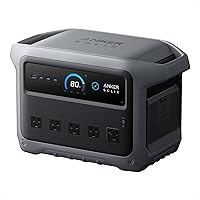
Bluetti Elite 30 V2 vs EB3A: Which to Buy? (November 2026)
Pick the Bluetti Elite 30 V2 for faster charging, more usable output and a longer-lasting LFP battery. The Bluetti Elite 30 V2 vs EB3A choice really comes down to charging speed and power lifting, since both stations are small 288Wh-class units built for camping and short outages.
On this page (10 sections)
- Bluetti Elite 30 V2 vs EB3A: the quick verdict
- The two side by side
- Which station delivers more usable output?
- How fast does each one charge?
- Which battery lasts longer?
- How much space and weight does each one add?
- Which one works better as a UPS?
- Who should buy the Bluetti Elite 30 V2?
- Who should buy the Bluetti EB3A?
- Verdict: which should you buy?
Pick the Bluetti Elite 30 V2 for faster charging, more usable output and a longer-lasting LFP battery. The Bluetti Elite 30 V2 vs EB3A choice comes down to speed and power, not raw capacity, because both are small 288Wh-class stations.
The Elite 30 V2 runs a 288Wh LFP battery with 600W continuous AC output and Power Lifting to 1500W. Bluetti rates it for a 0 to 80 percent wall charge in 45 minutes and a 10ms UPS switch, which matters when a storm knocks out the grid.
The EB3A is the older, familiar small Bluetti. This comparison centers on the Elite 30 V2, so we focus on where it changes the experience: charge time, output headroom, battery chemistry and size.
Pick the Elite 30 V2 unless the EB3A's lower price tier is the deciding factor for you.


Bluetti Elite 30 V2 vs EB3A: the quick verdict
The Elite 30 V2 wins for most buyers. It is the newer station with a 288Wh LFP battery, 600W continuous output, 1500W Power Lifting and a 60-month warranty.
The EB3A is still the sensible budget pick when you just need a small station for light camping or a desk.
Here is the short version. Choose the Elite 30 V2 if you want fast top-ups, more device headroom and a battery chemistry built for long life.
Choose the EB3A if the price tier matters most and your loads are small: phones, lights, a laptop, a small fan.
The rest of this comparison digs into the points that actually change the decision. We look at output, charging speed, battery life, size and weight, and UPS behavior.
Our score weighs specs, features and buyer feedback against what you're shopping for. The Elite 30 V2 takes an 8.9 here, and the score gap reflects the faster charging and higher output.
The two side by side
Both are compact 288Wh-class stations, but the Elite 30 V2 pushes more power and charges faster. The table below lines up the specs that matter for camping and short outages.
| Product | Best for | Battery | Output | Weight | Our score |
|---|---|---|---|---|---|
| Bluetti Elite 30 V2 | fast charging | 288Wh LFP | 600W (1500W lifting) | 9.4 lbs | 8.9 |
| Anina DC 8 mm Car Charging Cable | car charging | 9.0 | |||
| MRINCA Portable Carrying Case | transport | 9.4 |
The Elite 30 V2's headline numbers are 288Wh, 600W continuous, 1500W Power Lifting and 0 to 80 percent in 45 minutes. Its LFP battery and 10ms UPS set it apart from a typical small station.
It weighs 9.4 lbs and measures 9.8 x 7 x 6.6 inches, so it slips into a car trunk or a closet shelf.
The EB3A sits in the same small-station class. The key differences are the newer station's LFP chemistry, the lifting mode and the charging speed.
If you want a station you can top up quickly before a storm warning, the Elite 30 V2 is the one to reach for.
What the port count tells you
The Elite 30 V2 lists 9 total outlets. That spread matters when several people share one station at a campsite, or when a desk setup needs a laptop, monitor and phone charger running at once.
A station with fewer outlets forces you to swap plugs and lose time.
The listed output figure is 600W running and 1500W starting, and the engine power maximum is also 1500W. Those numbers line up with the Power Lifting mode rather than a separate hardware peak.
Read the lifting figure as a short burst, not a steady rating.
One practical note: a case sized for both units helps you carry either one. The MRINCA Portable Carrying Case comparison we ran looks at how the case fits this class of station, while this post stays on the electronics.
Which station delivers more usable output?
The Elite 30 V2 gives you more headroom for everyday appliances. Bluetti rates it at 600W continuous AC, twice what a typical small station offers, and Power Lifting mode pushes it to 1500W for short bursts.
That extra headroom changes what you can plug in. The Elite 30 V2 runs camping lights, speakers, a car fridge, laptops and CPAP machines without strain.
In lifting mode, Bluetti says it can handle a small kettle or toaster for a short run.
The EB3A's output ceiling is lower. For phones, tablets, a fan and a few lights, that's plenty.
For anything with a heating element or a motor that starts hard, the Elite 30 V2's lifting mode is the difference between "it runs" and "it trips."
Think about your heaviest short load. A 600W station covers a fridge and a laptop together.
A 1500W lifting burst covers a quick boil. If your plan includes either, the Elite 30 V2 is the pick.
How fast does each one charge?
The Elite 30 V2 charges much faster on wall power. Bluetti says it reaches 80 percent in 45 minutes and full in about 70 minutes at 380W.
It also offers 8 charging modes, so you can slow it to 200W when you want a gentler cycle.
Those modes cover AC wall, solar, car charging, a lead-acid battery and combined AC plus solar input. Bluetti says you can pair it with the PV60L solar panel for off-grid top-ups.
A 140W PD fast-charging feature is also listed. The station also supports app control over Bluetooth or Wi-Fi, so you can watch the charge level without standing over it.
Charging from a car
The Elite 30 V2's included kit lists a car charging cable alongside the AC cable. That covers the basic 12V socket case.
Bluetti also notes the station takes 12/24V car input and supports charging from a lead-acid battery or a generator.
The EB3A's charge time is slower by comparison. That matters most when you get short notice of a storm or you're topping up between campsites.
Faster charging means less time tied to an outlet and more time using the station.
If you charge from a car, the Anina DC 8 mm Car Charging Cable fits Bluetti EB3A and EB70-style DC input ports. Its 15A fuse and 6.6 ft copper cord make roadside charging simpler, and the spare fuses are handy on long trips.
The cord is rated for 12V to 24V input and 180W to 240W output, and the jacket is built to take temperature swings from -30°C to 70°C.
Which battery lasts longer?
The Elite 30 V2's LFP battery is built for a longer service life. Bluetti pairs the 288Wh LFP pack with UltraCell tech and a smart cooling system, and claims 50 percent lower power consumption than comparable units.
LFP chemistry is the key point. It resists the wear that shortens ordinary lithium packs over many cycles, and Bluetti backs the Elite 30 V2 with a 60-month warranty.
That matters if you plan to keep the station for years of camping seasons and storm seasons.
Standby draw is small but real. Bluetti lists standby power at 4.5W on AC-only idle, 5W on DC and 8W on AC.
The smart cooling and UltraCell design are meant to keep that draw down so the pack holds its charge between uses. Bluetti's own runtime formula uses 95 percent depth of discharge and 90 percent inverter efficiency, which is a realistic way to size a load against the 288Wh capacity.
The EB3A is the older design. If you value a battery you can cycle often without worrying about early capacity loss, the Elite 30 V2 is the better long-term buy.
For occasional use, the gap matters less.
How much space and weight does each one add?
The Elite 30 V2 stays easy to move at 9.4 lbs and 9.8 x 7 x 6.6 inches. Bluetti calls it lightweight and on-the-go, and the size fits a car trunk, a tent corner or a kitchen shelf.
That matters for camping and travel. A station you can carry in one hand is one you'll actually bring.
The 9.4 lbs figure is light enough for most adults to lift onto a picnic table or into a hatchback without help.
A padded case protects it in transit. The MRINCA Portable Carrying Case is sized for the Elite 30 V2 and EB3A, with a roll-up access window so you can run the station without pulling it out.
The shoulder strap and ventilated design help on longer walks from car to campsite. Inside, the main compartment closes with dual zippers and a mesh pocket in the lid holds solar cables.
Check the fit against the bag's listed size
The MRINCA case lists an outer dimension of 11.4 x 11.4 x 11.4 inches and a fit note for the Elite 30 V2 and EB3A. The Elite 30 V2 measures 9.8 x 7 x 6.6 inches, so the bag leaves room around the station for the cable pocket and padding.
It also comes in black nylon rated water resistant, which is the practical spec for a bag that rides in a truck bed or on a wet campsite table.
The EB3A is also a small station, but the newer unit's shape and weight figure are the ones to plan around. If you hike in to a campsite or store the station in a tight cabinet, measure the spot against the Elite 30 V2's 9.8 x 7 x 6.6 inches.
Which one works better as a UPS?
The Elite 30 V2 is the stronger backup for short outages. Bluetti lists a 10ms UPS switch that protects CPAP machines, laptops and routers when wall power drops.
That speed is fast enough to keep most electronics running through a brief flicker or a short blackout. Bluetti positions the Elite 30 V2 for winter storms and sudden power cuts, where losing data or stopping a CPAP machine is the real cost.
The station also offers four UPS modes: Standard keeps the battery at 100 percent for backup, Time-of-Use suits peak and off-peak rates, PV Priority favors solar-rich areas and Custom lets you tailor the mix. That flexibility is useful if you want the station ready for outages but not always fully charged.
The EB3A is a smaller, older station. If your main goal is keeping a router, laptop or medical device running through short outages, the Elite 30 V2's faster switch and LFP pack make it the better fit.
Set your expectations to bridging a short cut, not running a whole house.
Who should buy the Bluetti Elite 30 V2?
Buy the Elite 30 V2 if speed, output headroom and battery life top your list. It fits campers who want a quick wall or solar top-up, and households that want a short bridge during storms.
Specific buyers who should pick it:
- Storm-season households that want a 10ms UPS for a router, laptop or CPAP machine.
- Campers and road-trippers who value a 45-minute 0 to 80 percent charge and 8 charging modes.
- Small-appliance users who need the 1500W lifting burst for a kettle or toaster.
- Long-term buyers who want LFP chemistry and a 60-month warranty.
If you're building a bigger backup plan, the Bluetti Elite 100 V2 review covers a larger station in the same family. That's the step up when 288Wh isn't enough for a multi-day outage.
For a bigger jump, the Elite 200 V2 lists 2073.6Wh and 2600W continuous, with 3900W lifting and up to 9 devices at once.
Who should buy the Bluetti EB3A?
Buy the EB3A if price tier is the deciding factor and your loads are light. It remains a small, familiar station for phones, lights, a laptop and a small fan.
Pick the EB3A when you want a first power station for occasional camping or a desk backup, and the Elite 30 V2's faster charging and lifting mode aren't worth the extra cost to you. Its DC 8mm input also pairs with the Anina car cable, which is handy if you charge on the road.
The cable's 7.9 x 5.5mm barrel matches the 8mm input family, and the LED indicator shows when power is flowing.
Skip the EB3A if you need a fast top-up before a storm, a UPS-grade switch or the ability to run a small heating appliance. Those are the areas where the Elite 30 V2 clearly pulls ahead.
For a broader brand comparison, our EcoFlow vs Bluetti brand guide weighs how the two lines stack up on charging, ports and app control. It helps if you're still deciding which brand to buy into before picking a model.
Verdict: which should you buy?
The Bluetti Elite 30 V2 is the better buy for most readers. In this bluetti elite 30 v2 vs eb3a matchup, the newer station wins on charging speed, output headroom, battery chemistry and UPS behavior.
Pick the Elite 30 V2 if you want a small station that charges fast, runs a CPAP or router through a short outage and holds up over years of cycles. Its 288Wh LFP pack, 600W continuous output and 1500W Power Lifting cover camping and storm-season basics without much weight.
Pick the EB3A if the lower price tier is what gets you into a power station and your loads stay light. It's a reasonable first unit for phones, lights and a laptop, and the Anina car cable keeps it charged on road trips.
Either way, plan around the 288Wh class. For longer outages or bigger appliances, step up to a larger station like the Elite 100 V2.
For most people deciding between these two small units, the Elite 30 V2 is the one to buy.
Frequently asked questions
Is the Bluetti Elite 30 V2 better than the EB3A?
The Elite 30 V2 is the better pick for most people. It charges faster, offers Power Lifting to 1500W and uses LFP battery chemistry with a 60-month warranty.
The EB3A remains a budget-friendly small station, so it still makes sense if price or a specific port matters more than speed.
How long does the Elite 30 V2 take to charge?
Bluetti says the Elite 30 V2 goes from 0 to 80 percent in 45 minutes on AC wall power and reaches full in about 70 minutes. The 380W input is adjustable down to 200W if you want a gentler charge.
Can the Elite 30 V2 run a CPAP machine?
Yes. Bluetti lists CPAP machines among the devices the Elite 30 V2 can run, and its 10ms UPS switch keeps power flowing if the wall outlet drops.
Runtime depends on your machine's draw, so check the label against the 288Wh capacity.
Does the Elite 30 V2 work as a UPS?
It does. The Elite 30 V2 switches to battery in about 10 milliseconds when wall power fails, which Bluetti positions for routers, laptops and CPAP machines.
That makes it useful as a short bridge during outages, not as a whole-home backup.
Which station is lighter to carry?
The Elite 30 V2 weighs 9.4 lbs and measures 9.8 x 7 x 6.6 inches. That makes it easy to carry in one hand and to plan storage around when you size a carrying case.