SOLIX C1000 vs C1000 Gen 2: Which Is Better? (November 2026)
Choose the Anker SOLIX C1000 Gen 2 for most people because it has higher output and faster charging. Pick the original C1000 if you want more capacity, a car charging cable and expansion support.
On this page (13 sections)
- Anker SOLIX C1000 vs C1000 Gen 2: the quick verdict
- How do the two SOLIX C1000 models compare?
- Which model gives you more usable power?
- Does the original C1000 last longer between charges?
- Which one recharges faster?
- Which model is better for solar charging?
- Does expansion change the buying decision?
- Which model is easier to carry and store?
- How do UPS and app controls affect daily use?
- Who should buy the Anker SOLIX C1000 Gen 2?
- Who should buy the original Anker SOLIX C1000?
- Which SOLIX C1000 should you choose?
- Final verdict on Anker SOLIX C1000 vs C1000 Gen 2
Choose the Anker SOLIX C1000 Gen 2 for most people because it delivers more output, faster full charging and a lighter design. The original C1000 wins when its 1,056Wh battery, expansion support or included car charging cable matches your plan.
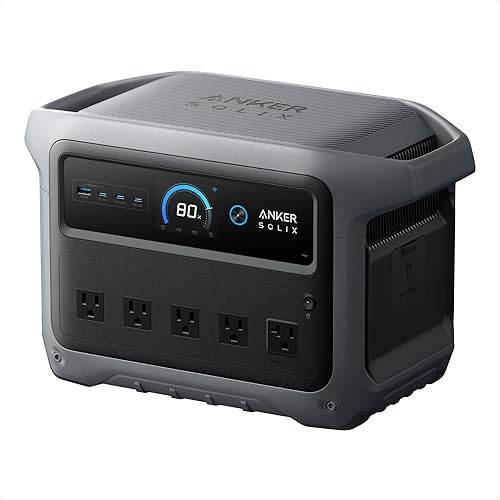
The Anker SOLIX C1000 vs Anker SOLIX C1000 Gen 2 decision is close because both are portable solar power stations for camping and emergency use. Their main split is simple: Gen 2 favors speed and output, while the original favors capacity and flexibility.
This comparison uses the published specifications for both models.

Anker SOLIX C1000 vs C1000 Gen 2: the quick verdict
The C1000 Gen 2 is the overall winner. Its 2,000W output, 3,000W peak, 49-minute full recharge and 10 ms UPS backup give it the wider range for outage preparation, laptops, CPAP machines and portable work setups.
The original C1000 remains a sensible pick for a different buyer. Its 1,056Wh battery is slightly larger, it supports expansion, and its box includes a car charging cable.
That 32Wh capacity gap is small beside the output difference. The Gen 2 can run higher-demand equipment within its stated limits, while the original gives you a little more stored energy before recharging.
Choose based on the feature you will use most often. Fast turnaround favors Gen 2.
A longer-term capacity plan, car charging and expansion favor the original.
How do the two SOLIX C1000 models compare?
The C1000 Gen 2 wins output, recharge speed and weight, while the original C1000 wins capacity, ports and expansion.
| Feature | Anker SOLIX C1000 Gen 2 | Anker SOLIX C1000 |
|---|---|---|
| Battery capacity | 1,024Wh | 1,056Wh |
| Continuous output | 2,000W | 1,800W |
| Peak or surge output | 3,000W | 2,400W |
| Full AC recharge | 49 minutes at 1,600W | Under 1 hour |
| Fast charging milestone | 49-minute full recharge | 80% in 43 minutes |
| Solar input | Up to 600W, 60V maximum | Up to 600W |
| Ports | 10 | 11 |
| Weight | 11.3 kg | 27.6 lb |
| Dimensions | 15.1 x 8.2 x 9.6 in | 14.8 x 8.07 x 11.02 in |
| Expansion | Not available | Supported |
| Included car charging cable | No | Yes |
The models have different dimensions and weight formats, so compare the actual shape and carrying weight with your storage space. Both are designed for portable use, camping and emergency power.
Which model gives you more usable power?
Pick the C1000 Gen 2 when your equipment needs more continuous output. It delivers 2,000W and reaches a 3,000W peak, compared with 1,800W and a 2,400W surge rating for the original.
Continuous output is the number that matters for equipment running for more than a brief startup. A higher peak rating helps with short starting demands, but it does not turn the station into a 3,000W continuous source.
The Gen 2 therefore gives more room for demanding devices within its stated limits. Its 10 ports can power up to 10 devices, which suits a home backup setup with several small electronics or a remote work station.
The original C1000 has 11 versatile ports and SurgePad technology. Its 1,800W output still fits many camping and emergency uses, but the lower ceiling makes the Gen 2 the better choice for higher-load equipment.
Power your devices one at a time when you are close to the station's limit. Add the running wattage of the equipment you plan to use, then leave room for startup demands.
Does the original C1000 last longer between charges?
The original C1000 has the larger battery, but only by 32Wh. Its 1,056Wh capacity edges out the Gen 2's 1,024Wh capacity for stored energy.
Battery capacity describes how much energy the station stores, not a fixed number of hours for every device. A device drawing 100W uses energy differently from one drawing 600W, and AC conversion creates some energy loss.
The original C1000 explains runtime with a 0.9 conversion-efficiency estimate for AC output: multiply 1,056Wh by 0.9, then divide by the device's power use. Real runtime changes with the load and operating conditions.
The Gen 2's 1,024Wh battery is close enough that the higher output and charging speed may matter more for many buyers. Choose the original for the small capacity advantage only when every extra watt-hour supports your use.
For a backup plan, list the devices that must stay on, their wattage and the hours you need them. That turns a capacity number into a more useful estimate.
Which one recharges faster?
The C1000 Gen 2 has the clearer full-charge advantage. Its HyperFlash technology can fully recharge the 1,024Wh battery in 49 minutes at 1,600W when UltraFast Charging is enabled in the Anker app.
The original C1000 reaches 80% in 43 minutes and completes a full charge in under an hour. That is also quick, but the Gen 2 reaches full capacity in a stated 49-minute cycle.
Temperature affects both charging claims. The original's 43-minute estimate uses an operating range of 68–122°F, or 20–50°C.
The Gen 2's UltraFast Charging activates when its battery cell temperature is above 20°C, while charging from 0–20°C slows down.
That makes charging conditions part of the decision. If you need to refill the station between short trips or during an outage, the Gen 2's full-recharge figure is the stronger fit.
Both models also support up to 600W of solar input. The Gen 2 reaches a full solar recharge in 1.8 hours with 600W of solar and a 60V maximum.
Which model is better for solar charging?
The C1000 Gen 2 is the better solar choice when a fast refill matters. It supports 600W of solar input with a 60V maximum and lists a 1.8-hour full solar recharge.
The original C1000 also accepts up to 600W of solar input and lists a 1.8-hour full solar recharge. Its solar input uses an 11–60V charger with an XT-60 connector, with current limits that vary by voltage range.
The original supports 10A maximum from 11–32V and 12.5A maximum from 32–60V. Anker identifies its PS100, PS200 and PS400 solar panel series as compatible choices.
Solar charging depends on the panel setup and available sunlight. A 600W input figure describes the supported input ceiling, not a guarantee that panels will deliver that amount all day.
For off-grid camping, place the station where the cable can reach the panels without creating a trip path. Keep the panel arrangement and voltage within the model's stated input range.
Does expansion change the buying decision?
Choose the original C1000 if expandable capacity is central to your backup plan. The C1000 Gen 2 removes expansion to reduce its size and weight.
That trade-off gives Gen 2 a more portable design, but the original offers a path for buyers who need more stored energy over a longer outage. Expansion matters most when your plan grows beyond a single station's capacity.
The original's 1,056Wh battery already has a small capacity lead. Expansion makes the difference more important for households that want to build a larger backup setup over time.
The Gen 2 is the cleaner choice when you want one compact station that charges quickly and moves between rooms, an RV or outdoor locations. Its portable design is 14% smaller and 11% lighter than similar models.
This is the biggest reason not to choose the overall winner automatically. The Gen 2 wins for most buyers, but the original wins for a buyer who specifically needs expandable capacity.
Which model is easier to carry and store?
The C1000 Gen 2 is the better portable station. It weighs 11.3 kg and measures 15.1 x 8.2 x 9.6 in, with a design intended for room-to-room use, RVs, beaches and parks.
The original C1000 weighs 27.6 lb and measures 14.8 x 8.07 x 11.02 in. Its footprint is slightly shorter and narrower, but it is taller and heavier in the listed measurements.
Convert the weights before comparing them directly: 11.3 kg is about 24.9 lb. The Gen 2 is therefore lighter by roughly 2.7 lb.
That difference is useful when the station moves often. A few pounds matter when carrying it from storage to a vehicle, lifting it into an RV or taking it outside for a short outing.
If the station will stay beside a home office or emergency load, portability may matter less than expansion and the extra 32Wh. For frequent moves, Gen 2's lighter build is the stronger reason to buy it.
How do UPS and app controls affect daily use?
The C1000 Gen 2 has the stronger stated UPS feature for sensitive everyday equipment. Its 10 ms UPS backup is designed to keep laptops and CPAP machines running through a fast switchover.
The Anker app enables the Gen 2's UltraFast Charging and offers Standard and Time-of-Use modes. Standard Mode suits plug-and-play use, while TOU Mode controls charging and discharging around electricity price changes.
The original C1000 also uses the Anker app to customize charging speeds and track power statistics. Its UPS function is included among the product's emergency-use features.
These controls help you match the station to the job. Use a straightforward mode for camping, then use app controls when charging speed or scheduled energy use matters.
UPS timing is not the same as an unlimited backup promise. Connect only equipment within the station's output limits, and use the station in a dry, suitable location with its power path kept clear.
Who should buy the Anker SOLIX C1000 Gen 2?
Buy the C1000 Gen 2 for faster full charging, higher output and easier carrying. It is the right match for remote workers, outage preparation, CPAP users, campers and anyone moving one station between several locations.
Its 2,000W output gives more headroom than the original's 1,800W. The 3,000W peak also exceeds the original's 2,400W surge rating for short startup demands.
The Gen 2's 49-minute full recharge is useful when the station needs to return to service quickly. Its 600W solar input and 1.8-hour solar recharge add a practical off-grid option for camping and RV setups.
Choose it when a compact station matters more than expansion. The 10 ms UPS backup also makes it the stronger choice for equipment that needs a quick transition during an outage.
The main trade-off is the missing expansion feature and the lack of an included car charging cable. If those two details define your setup, the original is the better fit.
Who should buy the original Anker SOLIX C1000?
Buy the original C1000 when you want expandable capacity, the largest battery here or a car charging cable in the box. It is a better fit for vehicle-based camping and backup plans that may grow beyond one station.
Its 1,056Wh capacity is the larger of the 2. The difference is modest, but it gives the original a small runtime advantage when the connected load and conditions are otherwise similar.
The included car charging cable also suits road trips. Its 11 ports give you one more connection than the Gen 2, while 600W solar input and a 1.8-hour solar recharge keep it useful away from an outlet.
The trade-offs are clear. Output drops to 1,800W, surge reaches 2,400W, and the unit is heavier than Gen 2.
For a broader Anker comparison, see our Anker SOLIX S2000 review and the guide to Anker SOLIX S2000 vs C1000 Gen 2. If you are comparing brands, our EcoFlow vs Anker SOLIX backup comparison covers the wider choice.
Which SOLIX C1000 should you choose?
Choose the Anker SOLIX C1000 Gen 2 for the best overall balance of output, recharge speed, UPS support and portability. Its 8.8 score reflects the stronger match for most backup, work and camping needs.
Pick the original C1000 when the deciding feature is expandable capacity. It also makes sense for road trips because the car charging cable is included, and its 1,056Wh battery is slightly larger.
The choice becomes easier when you name your first priority:
- Choose Gen 2 for 2,000W output and a 3,000W peak.
- Choose Gen 2 for a 49-minute full AC recharge.
- Choose Gen 2 for a lighter portable design and 10 ms UPS backup.
- Choose the original for expansion support.
- Choose the original for its 1,056Wh capacity.
- Choose the original for 11 ports and the included car charging cable.
Our Jackery Explorer 1000 v2 vs Anker SOLIX C1000 Gen 2 comparison is the natural next read if you are also considering Jackery.
Final verdict on Anker SOLIX C1000 vs C1000 Gen 2
The C1000 Gen 2 is the winner for most readers comparing Anker SOLIX C1000 vs Anker SOLIX C1000 Gen 2. Its 2,000W output, 3,000W peak, fast full recharge and lighter body make it the more capable everyday backup station.
The original C1000 earns the pick when expandable capacity is more valuable than speed. Its 1,056Wh battery, 11 ports and included car charging cable give it a distinct role for longer backup plans and vehicle travel.
Use the product's actual load, recharge routine and storage plan to make the final call. Gen 2 is the better all-around buy, while the original is the focused choice for expansion and car charging.
Frequently asked questions
Which has more battery capacity, the SOLIX C1000 or C1000 Gen 2?
The original Anker SOLIX C1000 has the larger battery at 1,056Wh, while the C1000 Gen 2 has 1,024Wh. The difference is 32Wh, so output, recharge speed and expansion support can matter more than capacity alone.
Which Anker SOLIX C1000 charges faster?
The C1000 Gen 2 fully recharges in 49 minutes at 1,600W, while the original C1000 reaches 80% in 43 minutes and completes a full charge in under an hour. Actual charging speed depends on operating conditions and the selected mode.
Can the Anker SOLIX C1000 Gen 2 be expanded?
The C1000 Gen 2 does not have the expansion feature. The original C1000 is the better choice when you want expandable capacity for a longer backup plan.
Which model has more output power?
The C1000 Gen 2 has the higher output at 2,000W, with a 3,000W peak. The original C1000 delivers 1,800W and has a 2,400W surge rating.
Which model is better for a car or camping trip?
The original C1000 includes a car charging cable and has 11 ports, which suits vehicle-based trips. The C1000 Gen 2 is smaller and lighter, has 10 ports, and offers faster full charging for portable use.