EcoFlow Delta 3 Classic vs Delta 2: Which to Buy? (November 2026)
Choose the EcoFlow Delta 3 Classic for most buyers. It pairs 1024Wh with 1800W output, a 10ms UPS and LiFePO4 cells rated for 10+ years, and it's the newer model in this ecoflow delta 3 classic vs delta 2 comparison.
On this page (11 sections)
- EcoFlow Delta 3 Classic vs Delta 2 at a glance
- Battery life and chemistry: why LiFePO4 decides it
- Output and UPS switching for home backup
- Charging speed: wall outlet vs solar panel
- Which EcoFlow should you buy for storm season?
- Which is better for camping and off-grid trips?
- Station only vs solar bundle: which should you buy?
- How the Delta 2 still earns a place
- How we compared these two stations
- Who should buy which?
- The verdict: EcoFlow Delta 3 Classic vs Delta 2
Choose the EcoFlow Delta 3 Classic for most buyers. It pairs a 1024Wh battery with 1800W output, a 10ms UPS and LiFePO4 cells rated for 10+ years, and it's the newer model in this ecoflow delta 3 classic vs delta 2 comparison.
The Delta 3 Classic also comes in a solar bundle that includes a 220W bifacial panel. That makes the delta 3 classic vs delta 2 choice less about raw specs and more about what you want in the box.
Both units target the same buyer: someone who wants backup power at home and a portable station for camping. The differences show up in charging speed, battery chemistry and UPS switching.
 Best for off-grid and storm prep
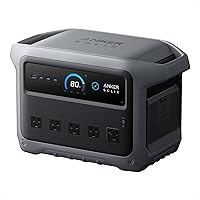
EF ECOFLOW Solar Generator Delta 3 Classic

EcoFlow Delta 3 Classic vs Delta 2 at a glance
The Delta 3 Classic wins on battery life and UPS speed. The Delta 2 remains a solid station, but the newer model covers more ground for the same kind of buyer.
The table below lines up the two Delta 3 Classic options we compared for this post.
| Feature | Delta 3 Classic (station) | Delta 3 Classic (solar bundle) |
|---|---|---|
| Capacity | 1024Wh | 1024Wh |
| AC output | 1800W, 3600W surge | 1800W, 3600W surge |
| Battery chemistry | LiFePO4, 10+ years | LiFePO4, 10+ years |
| UPS switching | Under 10ms | Under 10ms |
| AC recharge to 80% | About 45 minutes | About 45 minutes |
| Solar recharge | 2.5 hours with a 500W panel | 5.8 hours with the included 220W panel |
| App control | Yes, EcoFlow app | Yes, EcoFlow app |
| Extra battery support | No Delta 2 or Delta 3 Smart Extra Battery | No Delta 2 or Delta 3 Smart Extra Battery |
| Product | Best for | Capacity | Output | Battery | Our score |
|---|---|---|---|---|---|
| EF ECOFLOW Solar Generator Delta 3 Classic | off-grid and storm prep | 1024Wh | 1800W AC (3600W surge) | LiFePO4 | 9.7 |
| EcoFlow Delta 3 Classic | home backup on a budget | 1024Wh | 1800W AC (3600W surge) | LiFePO4 | 8.9 |
The Delta 2 is the older station in this pairing. It shares the 1024Wh class, but the Delta 3 Classic adds LiFePO4 cells and faster switching, which are the two upgrades that matter most day to day.
The station-only Delta 3 Classic also carries a 5-year manufacturer warranty and six AC outlets, so the difference against the Delta 2 isn't only inside the battery.
Battery life and chemistry: why LiFePO4 decides it
The Delta 3 Classic's LiFePO4 cells are the single biggest reason to pick it. EcoFlow rates them for 10+ years of daily use, backed by an EV-grade CTC design and a smart Battery Management System.
That matters for a backup station that sits idle for months and then works hard during a storm. A battery you can cycle daily without watching the calendar is worth more than a small spec edge elsewhere.
The Delta 2 was built around older cell chemistry. If you plan to use the station as a home UPS and cycle it often, the Delta 3 Classic's cell rating is the safer long-term bet.
LiFePO4 also holds up better through repeated partial charges. Topping the station to 80% after each short outage is normal use for this chemistry, not abuse.
What the 10+ year rating means in practice
Ten years of daily use is a cycle count, not a guarantee that the station will last a decade in every home. It tells you the cells are designed for frequent charge and discharge without the rapid capacity fade that older lithium chemistry shows.
For a storm-season buyer, that changes how you use the station. You can leave it on UPS duty all year, let it cycle through short outages and still expect it to hold up.
The smart Battery Management System adds another layer. It manages cell balance and protects against the charge and discharge conditions that shorten battery life, so the cycle rating is backed by electronics rather than cell chemistry alone.
Output and UPS switching for home backup
Both units target the same load class, but the Delta 3 Classic's under-10ms UPS switching is the feature to buy for. It automatically switches to battery fast enough to keep PCs, servers and networking gear running through a brief outage.
The station delivers 1800W continuous and 3600W surge, and X-Boost can push it to 2600W for heavier resistive loads. That covers a fridge, a microwave in short bursts, laptops and lights.
A 10ms switch is quick enough that most desktop computers won't reboot. It's not a substitute for a dedicated UPS on critical medical equipment, so check your device requirements before relying on it there.
EcoFlow's app adds Storm Alert and Self-Powered Mode. Storm Alert watches for outages in your area and prepares the station, while Self-Powered Mode runs your home off the battery and solar first.
Loads the 1800W output handles well
The 1800W continuous figure is the number to plan around. A full-size fridge, a modem and router, a few lamps and a laptop charger sit comfortably inside it.
The 3600W surge covers the brief startup draw when a compressor or motor kicks on.
X-Boost goes further for resistive loads like a space heater or a hair dryer, pushing the station up to 2600W. It's a useful buffer, but those loads drain 1024Wh fast, so treat them as short bursts rather than all-evening draws.
The six AC outlets on the station mean you can leave a home office or a kitchen corner plugged in without a power strip. That's the practical side of the UPS feature: the station can sit wired into your gear and switch over on its own.
Charging speed: wall outlet vs solar panel
Wall charging is the Delta 3 Classic's strongest everyday advantage. X-Stream AC charging takes it from 0 to 80% in about 45 minutes, so you can top up between outages without planning your day around it.
Solar is the second path. The station alone recharges in about 2.5 hours with an optional 500W panel.
The bundle's 220W bifacial panel takes about 5.8 hours, and its N-Type cells convert up to 25% of sunlight.
The bifacial design means the panel can collect light on both faces, which helps on bright ground or a reflective surface. That's a real gain for off-grid trips where every watt counts.
The bundle ships the station and the panel as separate deliveries. If one box arrives first, the other follows, so don't assume an order is incomplete when only half shows up.
Picking a recharge plan for your situation
If the station lives at home, the wall outlet is the plan that matters. A 45-minute run to 80% means you can recover most of the battery during a lunch break or between storms, and the last 20% fills in more slowly without demanding your attention.
If you camp or expect multi-day outages, solar becomes the primary path. The bundle's 220W panel takes about 5.8 hours to recharge the station in good sun, which fits a full day of daylight.
A 500W panel you supply yourself cuts that to about 2.5 hours.
Running both paths together isn't something EcoFlow lists for this station, so plan around one at a time. The safe approach is to size your solar setup to your typical trip length and keep the wall charger as the home backup.
Which EcoFlow should you buy for storm season?
Pick the Delta 3 Classic solar bundle for storm season if you want one purchase that covers wall and solar charging. The included 220W panel means you can recharge during a multi-day outage when the grid stays down.
The 10ms UPS keeps your router and fridge logic board alive through the initial flicker. Then the 1024Wh battery carries the essentials while you decide what to unplug.
The station-only Delta 3 Classic suits homes that already have panels or a generator. It's the cheaper way into the same battery, output and UPS package, and you can add solar later.
For a deeper look at the station on its own, our EcoFlow Delta 3 Classic review covers the day-to-day use cases in more detail.
Which is better for camping and off-grid trips?
The solar bundle is the better camping pick, because the panel lets you stay out longer without hunting for an outlet. A 1024Wh station runs lights, a portable fridge, phones and a laptop for a weekend.
The 220W panel's up-to-25% conversion rate means fewer hours of direct sun to refill. Bifacial collection adds a little more on bright ground, which helps on open campsites.
Weight matters too. The station-only model weighs 26.7 lb and measures 15.7 x 11.1 x 7.9 inches, so it fits in a trunk and lifts without a second person.
The panel packs separately.
If you're weighing this against another brand's camping station, our EcoFlow vs Anker comparison lines up the two lineups on capacity and output.
Station only vs solar bundle: which should you buy?
Buy the station-only Delta 3 Classic if you already own solar panels or only plan to charge from the wall. It delivers the same 1024Wh battery, 1800W output and 10ms UPS without the panel in the box.
The station alone supports solar charging up to 500W, so a panel you already own still works. EcoFlow rates a 500W panel at about 2.5 hours to full, faster than the bundle's 220W panel.
Choose the bundle when you want the panel matched to the station out of the box. The 220W bifacial panel is tuned for EcoFlow stations, so you skip the guesswork about connector types and voltage.
Either way, the Delta 3 Classic isn't compatible with Delta 2 Smart Extra Battery packs. If expansion with older batteries is part of your plan, the Delta 2's ecosystem is the one to check.
The spare cord question
A replacement AC cord is a small add-on, not a reason to choose one station over the other. The Rjmubaius 14AWG three-prong cord fits EcoFlow Delta and River series stations, among other brands, and runs 5 feet.
It's the kind of item worth keeping in a camping bin. The Delta 3 Classic's fast wall charging only helps if you have the right cord on hand, and a spare avoids a dead station when the original is left at home.
How the Delta 2 still earns a place
The Delta 2 remains a reasonable buy for someone who already owns its accessories. If you have Delta 2 extra batteries or a Delta 2 solar setup, staying in that ecosystem avoids starting over.
The Delta 2's 1024Wh class and 1800W output cover the same everyday loads. The gap is in chemistry and switching speed, not in what the station can run on a normal day.
For a buyer starting fresh, though, the Delta 3 Classic's LiFePO4 cells and under-10ms UPS are the better long-term base. The newer station is the one to build around.
If you're comparing across brands before you commit, our EcoFlow vs Bluetti breakdown covers how the two lineups differ on capacity and battery chemistry.
How we compared these two stations
Capacity, output, battery chemistry, UPS switching, recharge times and expansion support decided the ranking.
Our score weighs specs, features and how well each option fits what a backup and camping buyer wants. The Delta 3 Classic bundle leads because it adds a matched solar panel and LiFePO4 cells in one purchase.
The station-only model scores just below it because it drops the panel but keeps the same core hardware. The gap reflects what's in the box, not a difference in build quality.
The one spec that trips buyers up
Extra battery compatibility is the detail most people miss. The Delta 3 Classic explicitly doesn't work with the Delta 2 Smart Extra Battery or the Delta 3 Series Smart Extra Battery.
If your plan is to grow the station's capacity over time with batteries you already own, that's the point where the Delta 2 wins.
Who should buy which?
Most readers should buy the Delta 3 Classic solar bundle. It covers storm backup and off-grid trips with one order and the newer battery chemistry.
Buy the station-only Delta 3 Classic if you already have solar panels or a generator and want the same UPS and battery without paying for a second panel. It's the more flexible base for a home setup you plan to expand.
The Delta 2 makes sense only if you're already invested in its extra batteries or panels. For everyone else, the Delta 3 Classic is the model to build around.
If you want to see how the Delta 3 Classic stacks up against a lighter camping option, our Jackery Explorer 1000 V2 vs EcoFlow Delta 2 comparison covers a similar class of station.
The verdict: EcoFlow Delta 3 Classic vs Delta 2
The EcoFlow Delta 3 Classic wins this ecoflow delta 3 classic vs delta 2 comparison for most buyers. LiFePO4 cells rated for 10+ years, a 10ms UPS and 0–80% wall charging in about 45 minutes make it the stronger long-term base for backup and camping.
The solar bundle is the version to buy if storm season is your main concern. The included 220W bifacial panel means you can recharge when the grid is down, and the station still works from a wall outlet when the sun isn't out.
The station-only Delta 3 Classic is the smarter buy if you already own panels. The Delta 2 only makes sense for buyers locked into its older battery ecosystem.
Either way, match the station to how you'll recharge it most. A buyer who never leaves home gets more value from the wall-charging speed; a camper gets more from the solar bundle.
Frequently asked questions
Can the Delta 3 Classic use Delta 2 extra batteries?
No. EcoFlow says the Delta 3 Classic is not compatible with the Delta 2 Smart Extra Battery or the Delta 3 Series Smart Extra Battery.
If expansion with older batteries matters to you, check the Delta 2's own expansion options before you buy.
How fast does the Delta 3 Classic charge from the wall?
EcoFlow says X-Stream AC charging takes the Delta 3 Classic from 0 to 80% in about 45 minutes. That makes it practical to top up between outages, though the last 20% takes longer and actual times depend on your outlet and room temperature.
What can a 1024Wh power station run?
A 1024Wh unit like the Delta 3 Classic can run a fridge for hours, charge laptops and phones many times over, and handle a microwave in short bursts thanks to its 3600W surge. High-draw appliances still drain the battery quickly, so plan runtime around what you actually need.
Is the Delta 3 Classic a true UPS?
EcoFlow rates its switching at under 10ms, which is fast enough to keep most PCs, servers and home networking gear running through a brief outage. It is not a replacement for a dedicated UPS on critical medical equipment, so check your device requirements first.
Do I need the solar panel bundle?
Buy the bundle if you want off-grid charging without shopping for panels separately. Skip it if you already own compatible panels or only plan to recharge from a wall outlet, since the station on its own covers backup and camping use.