Bluetti vs Anker Power Stations: Which Is Better? (November 2026)
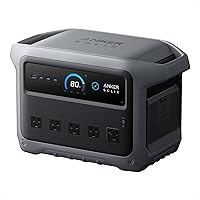
The Anker SOLIX C1000 Gen 2 with 200W Panel wins this Bluetti vs Anker power station comparison for most buyers. It pairs 2,000W output and 1,024Wh with a bundled solar panel and 10ms UPS backup, while the Bluetti Elite 30 V2 is the better pick for light travel.
On this page (10 sections)
- How do Bluetti and Anker power stations compare side by side?
- Which brand gives you more usable power for the money?
- Which charges faster from the wall or the sun?
- Which one works better as home backup during an outage?
- How much solar do you get in the box?
- Which is easier to carry and store?
- Which app and controls are more useful?
- Who should buy which brand?
- How does Bluetti compare with the other brands you might shortlist?
- Verdict: which brand should you pick?
The Anker SOLIX C1000 Gen 2 with 200W Panel wins this Bluetti vs Anker power station comparison for most buyers. It delivers 2,000W of output and 1,024Wh of LFP storage, and Anker includes a 200W solar panel.
The Bluetti Elite 30 V2 takes the other end of the market. At 9.5 lb and 288Wh, it's the station you grab for a weekend or a short blackout, not for running a fridge.
That split is the whole Bluetti vs Anker power station story: Anker builds for whole-home backup and basecamp, Bluetti for the bag by the door. Here's how the two brands actually differ on the specs that decide a purchase.


How do Bluetti and Anker power stations compare side by side?
Anker leads on capacity, output and bundled solar; Bluetti leads on weight and price tier. The table below puts the two flagship picks next to each other on the numbers that matter.
| Spec | Bluetti Elite 30 V2 | Anker SOLIX C1000 Gen 2 with 200W Panel |
|---|---|---|
| Capacity | 288Wh | 1,024Wh |
| Continuous output | 600W (1,500W lifting) | 2,000W (3,000W peak) |
| Battery chemistry | LFP | LiFePO4 |
| Weight | 9.5 lb | 11% lighter than similar 1kWh units |
| Solar panel included | No | Yes, 200W bifacial |
| Solar recharge | Supports panels up to 200W | Full in 1.8 hr at 600W |
| AC fast charge | 0 to 80% in 45 min | Full in 49 min with HyperFlash |
| UPS switchover | 10ms | Under 10ms |
| Outlets | 9 | 9 |
| App control | Bluetooth and Wi-Fi | Anker app with TOU mode |
The Bluetti is a 288Wh entry-level station with 600W continuous output and a 1,500W lifting mode for short bursts. Anker's C1000 Gen 2 carries a 1,024Wh LiFePO4 battery, 2,000W continuous and a 3,000W peak.
Those numbers aren't close. What's close is the fit for a specific buyer, and that's where the rest of this comparison goes.
Which brand gives you more usable power for the money?
Anker wins on raw power per dollar in this matchup. A 1,024Wh station with 2,000W output does far more work than a 288Wh unit at 600W.
Anker's 2,000W continuous and 3,000W peak cover most kitchen and home devices, from a fridge to a microwave on a short burst. The 1,024Wh capacity runs a fridge through a long outage or a full camping weekend with lights and a cooler.
Bluetti's Elite 30 V2 runs 600W continuous, and its Power Lifting mode pushes to 1,500W for brief loads like a small kettle or toaster. That's plenty for laptops, a CPAP machine, camp lights and a car fridge.
The trade is simple: Anker's bigger battery weighs more and takes more shelf space. Bluetti's small cell keeps the station carryable but caps what you can plug in.
If you're choosing between brands rather than models, Anker's mainstream line sits higher on the power ladder. Bluetti's strength is in the same small-station class, where the Elite 30 V2 competes well on weight and features.
Which charges faster from the wall or the sun?
Anker is faster to full from solar when you buy the panel bundle; Bluetti is faster to 80% from a wall outlet. Both charge quickly, but they're fast in different ways.
Anker's C1000 Gen 2 recharges fully in 1.8 hours on 600W of solar, and its HyperFlash AC mode fills the battery in 49 minutes when enabled in the Anker app. The bundle includes a 200W bifacial panel and the cables to connect it.
Bluetti's Elite 30 V2 reaches 80% in 45 minutes on AC and 100% in 70 minutes at 380W. That's fast for a 288Wh cell.
It supports solar panels up to 200W, but the station doesn't come with one.
For a camping setup where solar is the main source, the Anker bundle is the easier start. You unbox the station and the panel together and skip the extra shopping trip.
For an emergency station that lives by the door and tops up from a wall socket, Bluetti's 45-minute 80% charge is more useful than a solar input you might never use.
Solar charging in practice
Anker's 200W bifacial panel collects light from both sides, which helps when it's angled toward reflective ground. The station accepts up to 600W of solar, so you can add more panels later if you want a faster recharge.
Bluetti's Elite 30 V2 takes a BLUETTI 100W or 200W panel directly. A 60W panel connects through its own cable, and other panels need a separate solar charging cable.
Both brands support solar. The difference is that Anker sells the panel in the box for its headline station, while Bluetti keeps the cost down by leaving it out.
Which one works better as home backup during an outage?
Anker is the better backup station because 2,000W and 1,024Wh cover real household loads. Bluetti's 288Wh handles the essentials but not the appliances that matter most in a long outage.
Anker's 10ms UPS switchover keeps a CPAP machine, router or laptop running without a restart. Anker also includes Time-of-Use mode, which schedules charging and discharging around peak electricity rates.
Bluetti's Elite 30 V2 also has a 10ms UPS and four modes, including standard, time-of-use, PV priority and custom. That's a lot of control for a station this small, and it makes the Bluetti a tidy backup for a home office or bedroom.
Where the Bluetti falls short is duration. A 288Wh battery won't keep a fridge cold for long.
Anker's 1,024Wh will.
If your outage plan is "keep the router, laptop and phone alive," the Bluetti is enough and far easier to move. If it's "keep the fridge and a few lights going," Anker's capacity is the deciding factor.
How much solar do you get in the box?
Anker includes a 200W bifacial panel with the C1000 Gen 2; Bluetti sells panels separately. That's the biggest practical difference between these two offers.
The Anker bundle arrives in two packages: the station in one and the panel plus cables in the other. Anker notes the packages may arrive separately.
The panel kit includes two 8.2 ft solar charging cables and a 1.6 ft XT60i cable.
Bluetti's Elite 30 V2 ships with an AC charging cable and a car charging cable. To go solar you add a BLUETTI panel, and for non-Bluetti panels you also need a separate solar charging cable.
If you already own panels with the right connector, the Bluetti's lower base cost lets you reuse them. If you're starting from zero, the Anker bundle saves a second purchase and the guesswork about which panel fits.
Which is easier to carry and store?
Bluetti is the easier carry by a wide margin at 9.5 lb. Anker's C1000 Gen 2 is compact for a 1kWh station but still a two-hand lift.
Bluetti's Elite 30 V2 measures 9.8 x 7 x 6.6 inches and weighs 9.5 lb, so it fits in a backpack or a car trunk corner. Its integrated handle makes it easy to move from room to room during a storm.
Anker says the C1000 Gen 2 is 14% smaller and 11% lighter than similar models. That's meaningful in its class, but it's still a 1kWh unit meant to sit in one place for backup or ride in a vehicle for camping.
Storage follows the same logic. The Bluetti tucks into a closet shelf.
The Anker takes a floor spot or a dedicated shelf, and its panel needs somewhere to live too.
For apartment dwellers with limited space, the Bluetti's footprint is a real advantage. For a garage or cabin where the station stays put, Anker's size is a non-issue.
Which app and controls are more useful?
Anker's app centers on time-of-use scheduling and HyperFlash control; Bluetti's app covers monitoring and four battery modes. Both let you watch charge levels from your phone, and both connect over Bluetooth or Wi-Fi.
The Anker app turns on HyperFlash charging, tracks power statistics in real time and sets Time-of-Use mode. TOU mode shifts charging to cheaper hours and discharging to peak hours, which suits homes on time-based electricity rates.
Bluetti's app supports four modes: standard for full-time backup, time-of-use for peak/off-peak areas, PV priority for solar-heavy homes and custom. You can set and monitor each from the app over Bluetooth or Wi-Fi.
Neither app changes the hardware. The Anker app matters more if you want to squeeze savings out of peak rates.
The Bluetti app matters more if you want fine control over when a small backup battery charges and discharges.
If you're also weighing other brands, our EcoFlow vs Anker comparison covers how Anker's app and backup features stack up against another major name.
Who should buy which brand?
Buy Anker for whole-home backup and solar camping; buy Bluetti for light travel and small-device outages. The right brand depends on what you need to keep running.
Buy the Anker SOLIX C1000 Gen 2 with 200W Panel if:
- You want a fridge, lights and router running through a long outage.
- You plan to camp off-grid and want solar in the same order.
- You have time-of-use electricity rates and want to shift charging to cheaper hours.
- You need 2,000W for a microwave or space heater on a short burst.
Buy the Bluetti Elite 30 V2 if:
- You want a backup that lives on a shelf and weighs under 10 lb.
- Your outage plan covers a CPAP machine, laptop and phone, not a fridge.
- You want a fast wall charge for a station that stays indoors.
- You already own solar panels and don't need another one.
Neither brand wins on every spec. Anker's strength is power and bundled solar.
Bluetti's strength is portability and speed from the wall.
How does Bluetti compare with the other brands you might shortlist?
Bluetti holds its own on small-station design and Jackery matches it closely; EcoFlow pushes higher output. If you're cross-shopping brands, the model matters more than the badge.
The Jackery vs Bluetti comparison is the closest matchup for the Elite 30 V2. Both make small, light LFP stations for camping and short outages, and the choice comes down to port count and cycle ratings.
The EcoFlow vs Bluetti comparison looks at how Bluetti's small-station strengths hold up against EcoFlow's higher-output models. EcoFlow tends to push output and expansion, while Bluetti leans on compact designs and fast wall charging.
On the Anker side, the Anker SOLIX S2000 vs Bluetti Elite 300 comparison is the step up in size. If the Elite 30 V2 feels too small and the C1000 Gen 2 feels like too much station, that comparison sits in the middle.
Verdict: which brand should you pick?
For most readers, Anker wins this Bluetti vs Anker power station comparison. The SOLIX C1000 Gen 2 with 200W Panel covers home backup and solar camping in one purchase, with 2,000W output and a 1,024Wh LFP battery.
Choose Anker if a long outage means keeping the fridge and a few lights alive. The bundled 200W panel also makes it the simpler solar setup for off-grid trips.
Choose Bluetti if you want a station you can carry in one hand. The Elite 30 V2 at 9.5 lb is the better fit for a backpack, a small apartment shelf or a CPAP backup in the bedroom.
One rule settles most buyers: match the capacity to what you'll actually plug in. If a fridge is on the list, Anker's 1,024Wh is the safe pick.
If the list stops at laptops and lights, Bluetti's 288Wh is enough and far easier to move.
Frequently asked questions
Is Anker or Bluetti better for home backup?
Anker wins for most homes because the SOLIX C1000 Gen 2 delivers 2,000W and 1,024Wh with a 10ms UPS. The Bluetti Elite 30 V2 covers router and laptop backup only, so pick Anker when you need to run a fridge or space heater.
Can the Bluetti Elite 30 V2 run a CPAP machine?
Yes. Bluetti lists CPAP machines among the devices it supports, and the 10ms UPS switchover keeps one running when wall power drops.
Check your machine's wattage against the 288Wh capacity to estimate how many nights it covers.
Do Anker and Bluetti power stations charge from solar?
Both brands support solar charging. Anker bundles a 200W bifacial panel with the C1000 Gen 2 and lists a 1.8-hour full recharge at 600W of solar input.
Bluetti supports panels up to 200W, but the Elite 30 V2 does not include one.
Which brand has the longer battery life?
Anker rates the C1000 Gen 2 at 4,000 cycles before capacity falls to 80%, while Bluetti does not publish a cycle count for the Elite 30 V2. Cycle ratings matter most for daily use; occasional camping puts far fewer cycles on a battery.
Is a 288Wh station enough for a power outage?
It covers phones, a router and a laptop for hours, but not a fridge or heater. For a multi-day outage with major appliances, choose a 1,000Wh class station like the Anker C1000 Gen 2 or a larger model.