8 Best Portable Power Station Under $500 (October 2026)
The best portable power stations under 500 dollars include the Bluetti Elite 30 V2 for compact backup, the Jackery Explorer 300 for light carry, and the Anker SOLIX C300 DC for USB-C gear.
On this page (5 sections)
The best portable power station under 500 dollars for most small-device needs is the Bluetti Elite 30 V2, with 288Wh, 600W continuous output and a 9.5 lb weight. If you need more stored energy, consider the GRECELL 999Wh; if carrying weight matters most, compare the Jackery Explorer 300.
The phrase “under 500 dollars” is a moving target because prices change. Check the current price before buying, and compare it with the capacity and output you need.
A power station’s watt-hour rating describes stored energy, while its watt rating describes how much power it can supply at a time. Our plain guide to watts and watt-hours explains how both numbers affect your choice.
Our picks at a glance
-
1

-
2

-
3

How we chose portable power stations under 500 dollars
We compared the stated capacity, continuous output, charging options, weight and backup features against common needs for travel and short outages. We also considered where the models differ, such as DC-only charging, fast wall recharge or a larger battery.
Prices can move above or below the 500 dollars cap, so check the current price before ordering. Our scores weigh specs and features against the needs of someone shopping for a budget power station.
| Product | Best for | Capacity | Output | Weight | Our score |
|---|---|---|---|---|---|
| Bluetti Elite 30 V2 | compact backup | 288Wh | 600W continuous, 1500W lifting | 9.5 lb | 8.9 |
| Jackery Explorer 300 | light carry | 292Wh | 300W rated, 600W peak | 7.1 lb | 8.8 |
| Anker SOLIX C300 DC | USB-C gear | 288Wh | 300W | 2.8 kg | 8.5 |
| Bluetti AC180 | larger home backup | 1152Wh | 1800W, up to 2700W boost | 37.4 lb | 8.5 |
| DJI Power 1000 V2 | high output | 1024Wh | 2600W stated | Not stated | 8.4 |
| Jackery Explorer 500 v2 | mid-size capacity | 512Wh | 500W rated, 1000W surge | 13.3 lb | 8.4 |
| EcoFlow River 2 Max | fast recharging | 499Wh | 300W AC, up to 1000W with X-Boost | 13.3 lb | 8.3 |
| GRECELL 999Wh Power Station | maximum capacity | 999Wh | 1000W, 2000W surge | 23 lb | 7.2 |
Portable power stations under 500 dollars by use
The models below are ordered by score, with the top pick aimed at compact backup and the lower picks serving more specific needs. Check each unit’s output limit against the devices you plan to connect.
Bluetti Elite 30 V2: Best for compact backup
- 288Wh capacity
- 600W continuous output
- 1500W Power Lifting mode
- 9.5 lb weight
A compact unit with 600W continuous output and a stated 10ms UPS switch. Its 288Wh capacity favors small devices over long runtimes.
Pros
- 600W continuous output
- 10ms UPS function
- 380W wall charging
Cons
- 288Wh capacity limits runtime
- Power Lifting mode is distinct from continuous output
The Bluetti Elite 30 V2 combines 288Wh capacity with 600W continuous output in a 9.5 lb package. That gives it a useful balance for charging smaller electronics and supporting modest AC loads without the weight of the larger units here.
Bluetti says its Power Lifting mode can support up to 1500W for compatible loads. Treat that as a separate mode from the 600W continuous rating, and check the device requirements before relying on it.
The unit also has a stated 10ms UPS switch, 140W USB-C charging and eight charging modes. Bluetti says it can reach 80% from a wall outlet in 45 minutes, with full charging in 70 minutes under the stated conditions.
The 288Wh battery stores less energy than the 499Wh to 1024Wh options below. Choose this model for portability, smaller electronics and brief backup needs, then use our guide to what a 500W station can run to think through loads.
Jackery Explorer 300: Best for light carry
- 292Wh capacity
- 300W rated output
- 7.1 lb weight
- USB-C, USB-A, AC and car ports
This light unit offers nearly 300Wh for phones, cameras and other modest loads. It has 300W rated output and a mix of ports.
Pros
- Lightest listed weight in this group
- 100W USB-C PD port
- Can charge devices while recharging
Cons
- 300W rated output
- Solar panel sold separately
The Jackery Explorer 300 is the lightest listed model in this roundup at 7.1 lb, with 292Wh capacity and 300W rated output. It suits someone who wants a small unit for phones, cameras, laptops and similar devices.
Its ports include two AC outlets, a 100W USB-C PD port, two USB-A ports and a 120W car port. Jackery says the battery uses LiFePO4 chemistry and can exceed 4,000 charge cycles before reaching 70% capacity.
The unit can charge from a wall outlet, car port or compatible solar panel, sold separately. The 300W rated output is a firm constraint, so compare the total running load and startup demand of anything you want to plug in.
Pick it for easy carrying and everyday electronics. If you want more capacity for a longer outage, compare it with the best 500W power stations.
Anker SOLIX C300 DC: Best for USB-C gear
- 288Wh capacity
- 300W output
- Two 140W two-way USB-C ports
- 7 device charging ports
A DC-focused option for charging compatible devices through USB and a car socket. It has 288Wh and seven charging ports.
Pros
- Two 140W two-way USB-C ports
- Seven charging ports
- Can recharge by solar or car
Cons
- No AC outlets
- Solar compatibility has specific limits
The Anker SOLIX C300 DC is the most specialized pick here: it provides 288Wh through DC charging ports, including two 140W two-way USB-C ports. It fits compatible USB-C devices and gear that can charge from its car socket.
Its seven ports include a 120W car socket, USB-C ports rated at 140W, 100W and 15W, plus two 12W USB-A ports. Anker says the unit can recharge to 80% in an hour using dual USB-C charging.
Solar use has specific limits. Anker recommends 60W or 100W panels and says the unit is incompatible with several of its own panel models, so check the panel voltage and connector before buying.
This model has no AC outlets, so it doesn't suit a buyer who needs AC power for household plugs. For a clearer view of how capacity translates to device runtime, read what a 500W power station can run.
Bluetti AC180: Best for larger home backup

- 1152Wh capacity
- 1800W output
- Up to 2700W with boost
- 500W maximum solar input
The largest stated battery and output in this group suit longer or heavier loads. Its 37.4 lb weight makes it less convenient to carry.
Pros
- 1152Wh capacity
- 1800W output
- 20ms UPS function
Cons
- Heaviest listed model here
- Check the current price against your budget
The Bluetti AC180 is the high-capacity option, with a 1152Wh battery and 1800W output. It offers much more stored energy than the compact units, but its 37.4 lb weight makes it a stationary or occasional-move choice.
Bluetti says the output can be boosted to 2700W through its app. It also supports up to 500W of solar input, and the brand says it can fully recharge in an hour at 1440W AC input.
The AC180 has a stated UPS transition time of 20ms. Runtime depends on what you connect, and heavier appliances can use stored energy quickly.
Choose the AC180 if more capacity and output matter more than easy carrying. See our guide to 1000W power stations for another way to compare home-use options.
DJI Power 1000 V2: Best for high output

- 1024Wh LFP battery
- 2600W output stated
- 80% recharge in 37 minutes claimed
- 10ms UPS switch claimed
Its 1024Wh battery and high stated output fit a buyer who prioritizes capacity and appliance support. Solar and car charging need a separate compatible adapter.
Pros
- 1024Wh LFP battery
- Dual 140W USB-C ports
- 10ms UPS switch claimed
Cons
- Solar and car charging need a separate adapter
- Check the current price against your budget
The DJI Power 1000 V2 pairs a 1024Wh LFP battery with a stated 2600W output. It suits buyers who need a large battery and high output for compatible appliances, though you should check the device’s running and startup needs.
DJI says the unit can recharge to 80% in 37 minutes and offers a 10ms UPS switch. It also has two 140W USB-C ports, with a combined 280W output.
Solar and car charging require a separate compatible adapter because those modules are not built in. That requirement matters if you expect to recharge away from a wall outlet.
Check the current price and adapter needs before choosing it for a budget setup. If storms are the main concern, our 2000W power station guide covers another group of backup choices.
Jackery Explorer 500 v2: Best for mid-size capacity

- 512Wh capacity
- 500W rated output
- 1000W surge
- 10ms UPS
This model offers more capacity than the 300Wh class while keeping rated output at 500W. Its 10ms UPS is useful for supported backup setups.
Pros
- 512Wh capacity
- 10ms UPS
- 0–80% wall charge in 52 minutes claimed
Cons
- 500W rated output
- Solar panels sold separately
The Jackery Explorer 500 v2 offers 512Wh capacity and 500W rated output, placing it between the compact 300Wh class and the larger home-backup units. Its 1000W surge rating gives extra startup headroom for compatible devices, but the rated output remains 500W.
Jackery says it reaches 80% charge from a wall outlet in 52 minutes. The model also has two AC outlets and a 10ms UPS function, plus solar and 12V car charging support.
At 13.3 lb, it is portable but weighs more than the Explorer 300. Choose it if you need the extra battery capacity for a trip or brief outage and your devices fit the output limit.
For a focused comparison with other stations near this output class, see our 500W power station picks.
EcoFlow River 2 Max: Best for fast recharging
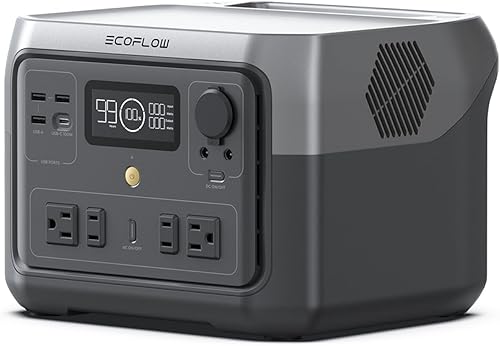
- 499Wh capacity
- 300W AC outlets
- AC recharge in about 1 hour claimed
- 13.3 lb weight
The nearly 500Wh battery and one-hour AC recharge claim suit buyers who value turnaround time. Its AC outlets are rated at 300W.
Pros
- 499Wh capacity
- One-hour AC recharge claimed
- 220W solar input supported
Cons
- 300W AC outlet rating
- X-Boost support should be checked with the intended device
The EcoFlow River 2 Max combines a 499Wh battery with 300W AC outlets and a weight of 13.3 lb. It suits buyers who value a quick wall recharge and need around 500Wh of stored energy.
EcoFlow says its X-Stream system can recharge the unit from an AC outlet in about an hour. It also claims up to 1000W output with X-Boost, but the AC outlets are rated at 300W, so check compatibility with any higher-draw device.
Solar charging is supported at up to 220W, with a stated recharge time as fast as 2.3 hours. The product description gives a 30ms UPS switchover when the station is plugged into the wall.
Pick it for a quick recharge and mid-size battery, while keeping the outlet rating in mind. Our EcoFlow vs Bluetti comparison looks at brand differences across other models.
GRECELL 999Wh Power Station: Best for maximum capacity

- 999Wh capacity
- 1000W output
- 2000W surge
- 23 lb weight
Its 999Wh capacity and 1000W output stand out for a buyer who needs more stored energy. GRECELL advises against devices rated above 1000W.
Pros
- 999Wh capacity
- 1000W output
- AC, solar and car charging
Cons
- 23 lb weight
- Turn off AC output when not in use to reduce idle drain
The GRECELL 999Wh Power Station has the largest stated capacity in this roundup, along with 1000W output and a 2000W surge rating. It fits buyers who prioritize stored energy and multiple ports over the lowest weight.
Its ports include two AC sockets, USB-A, USB-C, 12V DC ports, a car socket and wireless charging. GRECELL says it supports AC, solar and car recharging, and includes an MPPT controller for solar input.
The power station weighs 23 lb, and GRECELL advises against devices rated above 1000W. The brand also says to turn off AC output when unused, since idle draw can deplete the battery.
This unit’s capacity is attractive, but check the current price against the 500 dollars limit and confirm the output meets your loads. For a broader storm setup, start with our guide to 2000W power stations.
What matters when choosing a power station under 500 dollars?
Capacity, output and charging options matter most. Match the station to the devices you need to run and how long you need them powered.
How much capacity should you get?
Capacity tells you how much energy the battery stores, though usable runtime is lower because conversion and the station itself use some energy. A 288Wh unit is compact for brief needs, while 499Wh to 1152Wh gives you more stored energy for longer use.
Estimate your devices’ watt-hours by multiplying watts by hours of use, then leave room for conversion losses. Our watt-hour explainer walks through the calculation.
How much output do your devices need?
Output is the maximum power the unit can deliver at once. Add the running watts of devices you plan to use together, and check for any higher startup draw.
Do not treat surge or boost figures as continuous output. A higher surge rating can help with a brief startup demand, but it does not mean the station can run that load continuously.
Should you prioritize weight or battery size?
Choose a lighter station if you will carry it often, and a larger battery if you need longer runtime between recharges. The Explorer 300 weighs 7.1 lb, while the 999Wh GRECELL weighs 23 lb and the 1152Wh AC180 weighs 37.4 lb.
Capacity and weight tend to rise together in this set. Before buying, consider where you will store the unit and how often you will move it.
Which charging options are useful?
Wall charging is convenient at home, while solar and car charging can help when you are away from an outlet. Check panel limits and adapter needs, since compatibility differs by model.
The Anker C300 DC, for example, requires solar panels with an 11–28V range and an XT60 connector. DJI requires a separate compatible adapter for solar or car charging.
How do you choose between these under-500 dollars power stations?
Choose the Bluetti Elite 30 V2 for a compact balance of output and UPS support, the Explorer 300 for lighter carrying, or the GRECELL for more stored energy. If you need a larger home backup unit, compare its price and weight with the AC180 and DJI Power 1000 V2.
List the devices you need, note their watts and expected hours of use, then compare those figures with capacity and output. Our portable power station buying checklist helps narrow the choice to your actual loads.
Which portable power station under 500 dollars should you pick?
Pick the Bluetti Elite 30 V2 for modest backup in a compact package, the Jackery Explorer 300 if weight is your priority, or the GRECELL 999Wh Power Station if you need the most stated capacity here. Check current prices before deciding, because the 500 dollars ceiling can change with sales.
If your main goal is running appliances through a long outage, compare the required load with a larger unit and read our storm backup power station guide before you buy.
Our top 3 picks at a glance
-
1
-
2
-
3
Frequently asked questions
Can you get a good portable power station under 500 dollars?
Yes. Under-500 dollars options can cover phones, laptops, lights and some larger devices, depending on the station's capacity and output.
Compare watt-hours for stored energy and watts for the load you want to run.
Prices change, so check the current price before choosing a model.
What size power station should you buy under 500 dollars?
Choose capacity based on how long you need to run your devices, then check that the output rating can handle their power draw. A 288Wh unit suits shorter, lighter needs, while options near 500Wh or 1000Wh store more energy.
Use our watt-hour guide to estimate runtime.
Can a 500W power station run a 500W appliance?
A station rated for 500W may run a device drawing 500W, but startup surges and other connected loads can exceed its limit. Check both the appliance's running and starting watts, along with the station's continuous and surge ratings.
Our 500W power station guide explains common load limits.
Are portable power stations under 500 dollars good for outages?
They can keep smaller devices powered during an outage, but runtime depends on battery capacity and the load. A compact 288Wh unit is better suited to short, modest needs than to running a large appliance for hours.
For household backup, start with our guide to choosing a power station.


