DJI Power 1000 V2 vs Anker C1000 Gen 2: Which Is Better? (November 2026)
The Anker SOLIX C1000 Gen 2 wins the dji power 1000 v2 vs anker c1000 gen 2 comparison for most buyers. Its 2,000W output, 10 ports and under-10 ms UPS mode make it the stronger home backup and camping pick, while the DJI suits pilots who want a quiet station in their drone workflow.
On this page (10 sections)
- DJI Power 1000 V2 vs Anker C1000 Gen 2 at a glance
- Which station delivers more usable power?
- How fast does each station recharge?
- Which station has the better ports and connections?
- Which is better for home backup?
- Which station travels better?
- How do the two compare on safety and weather resistance?
- Who should buy the Anker SOLIX C1000 Gen 2?
- Who should buy the DJI Power 1000 V2?
- The verdict: which station should you pick?
The Anker SOLIX C1000 Gen 2 wins the dji power 1000 v2 vs anker c1000 gen 2 comparison for most buyers. It delivers 2,000W from 10 ports, recharges in 49 minutes and switches to battery backup in under 10 ms.
The DJI Power 1000 V2 makes more sense for drone pilots who want a station built around their flight gear.
This comparison focuses on the practical differences that decide the purchase: how much power each station delivers, how fast it refills, what you can plug in and where it can safely sit. We checked the specs and features of each model rather than testing them.

DJI Power 1000 V2 vs Anker C1000 Gen 2 at a glance
The Anker C1000 Gen 2 edges ahead on output and port count, while the DJI Power 1000 V2 competes on quiet operation and drone-friendly features. Here's how the two stations line up.
| Product | Best for | Output | Capacity | Ports | Our score |
|---|---|---|---|---|---|
| Anker SOLIX C1000 Gen 2 Portable Power | whole-room backup | 2,000W, 3,000W peak | 1,024Wh | 10 | 9.3 |
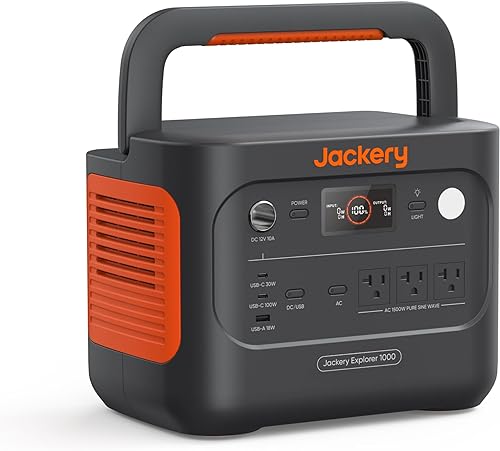
| Jackery Explorer 1000 v2 | light and easy camping | 1,500W, 3,000W peak | 1,070Wh | 9.1 | |
| Anker SOLIX C1000 Gen 2 with 200W Panel | off-grid solar setups | 2,000W, 3,000W peak | 1,024Wh | 8.7 | |
| Jackery Explorer 500 v2 | small everyday outages | 500W, 1,000W surge | 512Wh | 8.4 |
The Anker SOLIX C1000 Gen 2 runs 2,000W continuous with a 3,000W peak. That headroom matters when a fridge compressor or a power tool kicks on.
The station carries a 1,024Wh LiFePO4 battery and spreads its outlets across 10 ports, so a family can charge phones, laptops and a lamp without swapping cables.
The DJI Power 1000 V2 takes a different route. DJI built it around its own drone batteries and charging accessories, and its fans are designed to stay quiet during a charge cycle.
If your camping kit centers on a Mavic or Air series drone, that ecosystem is the reason to look at DJI first.
The gap is not enormous, and both stations handle the same core jobs: running a laptop, lighting a room and keeping a router alive during an outage. The choice comes down to how you'll use it.
Which station delivers more usable power?
The Anker C1000 Gen 2 gives you more watts to work with, which means it runs more appliances at once. That 2,000W rating clears the bar for most home and camping loads.
Watts decide what a station can start and keep running. A 1,500W output covers lights, a laptop, a TV and a small fan.
A 2,000W output reaches into small kitchen appliances and power tools.
The Anker unit's 3,000W peak handles startup surges from a fridge or a circular saw. Its 1,024Wh battery keeps those loads going longer than a smaller pack would.
Anker also removed the expansion battery option to keep the C1000 Gen 2 compact and 11% lighter than similar models.
For a camping trip, the difference shows up when someone wants to run an electric kettle or a coffee maker. That's the sort of load the C1000 Gen 2 takes in stride.
A 1,500W station may struggle or trip.
If your list of devices tops out at phones, lights and a laptop, this section won't decide much. Both stations handle that easily.
The output gap matters when you plan to run appliances.
How fast does each station recharge?
Anker's HyperFlash charging is the faster of the two on paper, refilling the C1000 Gen 2 in 49 minutes at 1,600W. The DJI Power 1000 V2 charges at a more relaxed pace that suits overnight refills.
Speed matters most when you're packing for a trip or preparing for a storm. A station that refills in under an hour means less waiting and fewer cords trailing across the kitchen floor.
Anker's figure comes with a caveat. HyperFlash only kicks in when the battery cells sit above 20 °C, so a cold garage or a winter car trunk will slow the charge.
The app has to enable the fast mode as well. Below that temperature, the C1000 Gen 2 falls back to a normal charge rate.
DJI's recharge speed fits a different rhythm. The Power 1000 V2 is designed to top up from a wall outlet or a car while you drive between flight spots.
It isn't built to beat Anker's headline time, but it doesn't need to be for a photographer who charges overnight at a hotel.
Both stations support solar. Anker lists a full solar recharge in about 1.8 hours when you feed it 600W of panels.
The solar bundle pairs the station with a 200W bifacial panel for off-grid trips.
Solar charging on the go
Anker's solar input tops out at 600W, and the bundled PS200 panel gets you partway there. If you plan to camp off-grid for days, the Anker SOLIX C1000 Gen 2 with 200W Panel saves you matching panels to the station yourself.
The DJI Power 1000 V2 accepts solar through its own input. Check the panel voltage and connector before you buy, because each brand specifies its own solar requirements.
Which station has the better ports and connections?
The Anker C1000 Gen 2 offers 10 ports, covering more devices without an adapter. The DJI Power 1000 V2 has a smaller set built around drone charging.
Port count matters when a household plugs in several things at once. A typical outage load includes a phone, a tablet, a laptop, a router, a lamp and a fan.
That's six devices before anyone thinks about a TV.
The C1000 Gen 2 spreads those across AC outlets, USB-C, USB-A and a 12V car port. Anker includes a car charging cable in the box.
The station's cover has velcro flaps so you can reach the outlets without pulling it off.
DJI's port lineup centers on USB-C and AC output plus its own drone battery ports. If you fly often, that specialization is the point.
If you don't, you're paying for connections you won't use.
Think about your worst outage night. List every device you'd want running at once, then count the ports each station offers.
The Anker's extra outlets remove the need for a power strip in most rooms.
Which is better for home backup?
The Anker C1000 Gen 2 is the stronger home backup station, with under-10 ms UPS switchover and a 10-year battery life. The DJI Power 1000 V2 is built for travel more than for a shelf beside the breaker panel.
A UPS mode keeps a router, a CPAP machine or a desktop computer running when the grid drops. The C1000 Gen 2 switches over in under 10 ms, fast enough that most electronics won't notice the gap.
The bundled version adds the same UPS behavior, so the solar bundle doesn't give up backup speed.
Anker rates the C1000 Gen 2 battery for 4,000 cycles before it falls to 80% capacity. That's about a decade of daily use.
For a station that sits plugged in as a backup, that lifespan figure matters more than the peak wattage.
DJI's station lacks that home-focused framing. It's portable and quiet, but its design priority is drone charging, not keeping a house running through a storm.
For whole-home backup the C1000 Gen 2's bigger sibling is the better fit, as our Anker SOLIX S2000 review explains.
If you want to compare the Anker line more closely, the Anker SOLIX S2000 vs C1000 Gen 2 breakdown shows where the extra capacity pays off.
Which station travels better?
The Anker C1000 Gen 2 stays compact for its output, but the DJI Power 1000 V2 suits travel tied to drone flying. Portability means more than weight when a station lives in a car.
The C1000 Gen 2 measures 15.1 x 8.2 x 9.6 inches. Anker says it's 14% smaller and 11% lighter than similar models, which helps when you carry it from the car to a campsite.
Its handle makes a one-hand lift possible for short distances.
The IP54 cover is a real travel advantage. Rain splashes won't reach the outlets, and the rubber feet keep the base off wet ground.
That's useful on a damp campsite or a tailgate in light rain.
DJI's design keeps noise down during charging. A quiet station matters when you're charging drone batteries in a tent or a shared campsite where a loud fan would draw complaints.
Neither station is a backpacking item. A 1,024Wh pack is a car-camping tool, not something you carry on a hike.
If you need something lighter, a smaller station such as the Jackery Explorer 1000 v2 is easier to move at 23.8 lb with a foldable handle.
How do the two compare on safety and weather resistance?
The Anker C1000 Gen 2 carries an IP54 rating and a water-resistant cover; the DJI Power 1000 V2 relies on its build quality and quiet charging. Weather protection is the clearer differentiator.
IP54 means dust is limited and water splashes are handled. The C1000 Gen 2's cover design keeps outlets usable while protected, and the velcro flaps let you charge without removing the whole cover.
That's a practical detail when a storm rolls in and you need to plug in a lamp.
Anker backs the C1000 Gen 2 with a 5-year warranty. That's a longer coverage window than many portable stations offer, and it fits the 10-year battery-life claim.
DJI's station is built for outdoor use around drones. Its quiet fans and stable output suit charging delicate electronics.
If you fly in dusty or damp conditions, check how the station handles weather before you commit.
For either station, keep it off wet ground and out of standing water. A cover helps with splashes, not with a flooded patio.
Who should buy the Anker SOLIX C1000 Gen 2?
Buy the Anker C1000 Gen 2 if you want one station for storms, camping and everyday charging. It's the more versatile of the two for a household.
The 2,000W output runs a fridge, a space heater on low or a power tool. The 10 ports cover a family's devices at once.
The 49-minute recharge means a station can be ready between a morning outage and an evening one.
The UPS mode makes it a set-and-forget backup for a router or a CPAP machine. Plug it in and leave it; it switches over when the grid fails.
The IP54 cover means a sudden rain shower won't stop a campsite charge.
The solar bundle adds a matched 200W panel for off-grid trips. If you want to compare Anker against another major brand before deciding, our EcoFlow vs Anker comparison covers the head-to-head.
Who should buy the DJI Power 1000 V2?
Buy the DJI Power 1000 V2 if your power needs revolve around drone batteries and quiet charging. It's the specialist pick, not the generalist.
DJI built the station around its own battery ecosystem. If you already own DJI drones, the charging ports and quiet fans fit your workflow.
A loud station in a campsite or a hotel room is a nuisance; DJI's design addresses that.
The station also works as a general portable power source. It runs lights, laptops and small appliances.
But its port set and design priorities are narrower than Anker's.
If you rarely fly a drone and mainly want backup for a house or a camper van, the Anker station covers more ground. The DJI is the right buy when drone charging is the main job and general backup is a bonus.
The verdict: which station should you pick?
For most readers, the Anker SOLIX C1000 Gen 2 is the better buy in this dji power 1000 v2 vs anker c1000 gen 2 matchup. It wins on output, ports, recharge speed and home backup features, and the IP54 cover adds real-world durability.
Pick the Anker C1000 Gen 2 if you want a single station that handles a storm outage, a family camping trip and everyday device charging. Its 2,000W output and under-10 ms UPS mode make it the stronger all-rounder.
The solar bundle version is the better choice if you plan to camp off-grid and want matched panels.
Pick the DJI Power 1000 V2 if drone charging is your main reason for buying a station and you value quiet operation over port count. It's a capable station, but it's built around a narrower set of jobs.
Either way, match the station to the loads you'll actually run. Count your devices, check the watts on your biggest appliance and decide whether backup speed or travel weight matters more to you.
If you want a lighter camping companion instead, the Jackery Explorer 1000 v2 vs Anker SOLIX C1000 Gen 2 comparison covers that pair.
Frequently asked questions
Can the Anker SOLIX C1000 Gen 2 run a fridge during a power cut?
Yes. The C1000 Gen 2 supplies 2,000W continuous and 3,000W peak, which covers most home fridges during an outage.
Its 1,024Wh capacity keeps a typical fridge running for hours, and the UPS mode switches loads over in under 10 ms.
How fast does the Anker C1000 Gen 2 recharge from a wall outlet?
Anker says HyperFlash charging refills the C1000 Gen 2 in 49 minutes at 1,600W once you enable the mode in the app. Charging slows when the battery cells sit below 20 °C, so a cold garage can stretch that time.
Is the Anker C1000 Gen 2 safe to use in rain?
It carries an IP54 rating, so rain splashes are kept out by the cover. Rubber feet lift the station off wet ground.
It is not built for full immersion or use in standing water, so keep it under cover in a storm.
Does the DJI Power 1000 V2 support expansion batteries?
DJI sells the Power 1000 V2 as a standalone station with its own battery. If you need to grow capacity later, choose a model that supports expansion batteries rather than adding a second separate unit.
Which station is lighter to carry on a camping trip?
The Jackery Explorer 1000 v2 weighs 23.8 lb with a foldable handle, which makes it the easiest of the larger stations to move. The Anker C1000 Gen 2 is 11% lighter than similar models, but its 1,024Wh capacity still makes it a two-hand lift.


